Bale beds equip a truck to lift and move hay using powered arms or spikes. The right choice depends on how you store, haul and feed your bales. Compare the handling method first, then confirm the bed fits your truck and its working load.
A hay bed earns its place by fitting the way you feed and haul. Start with your bales, where you store them, and how you want to put hay in front of the cattle. Then check the bed and truck together.
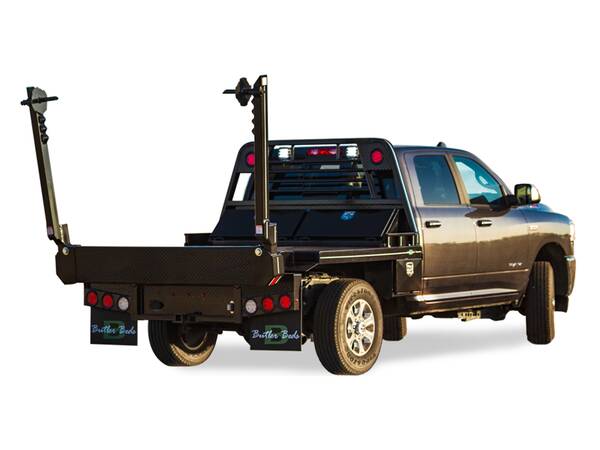
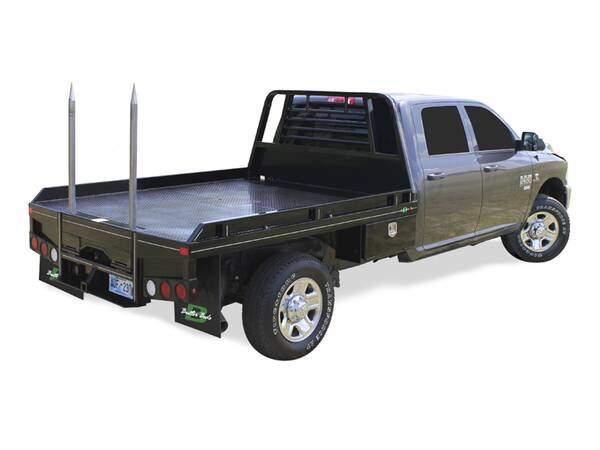
DJ FleetWorX in Wayne, Oklahoma, offers Butler Arm Beds and Butler Spike Beds. This guide explains the main differences and what to bring when you ask us about an installation.
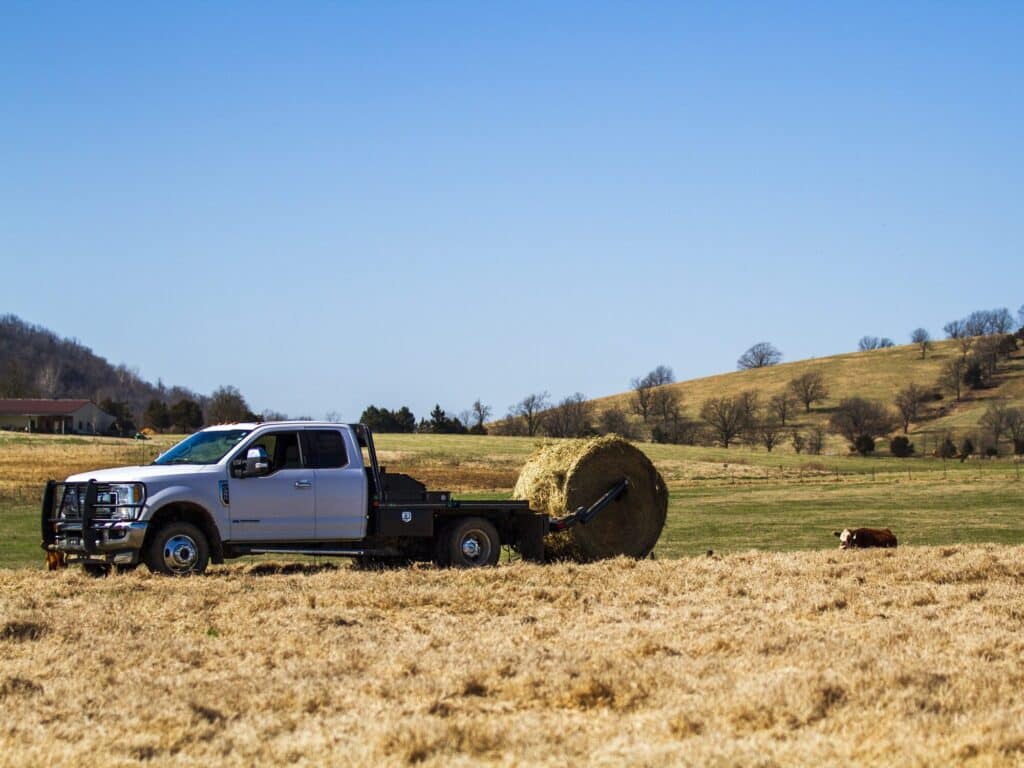
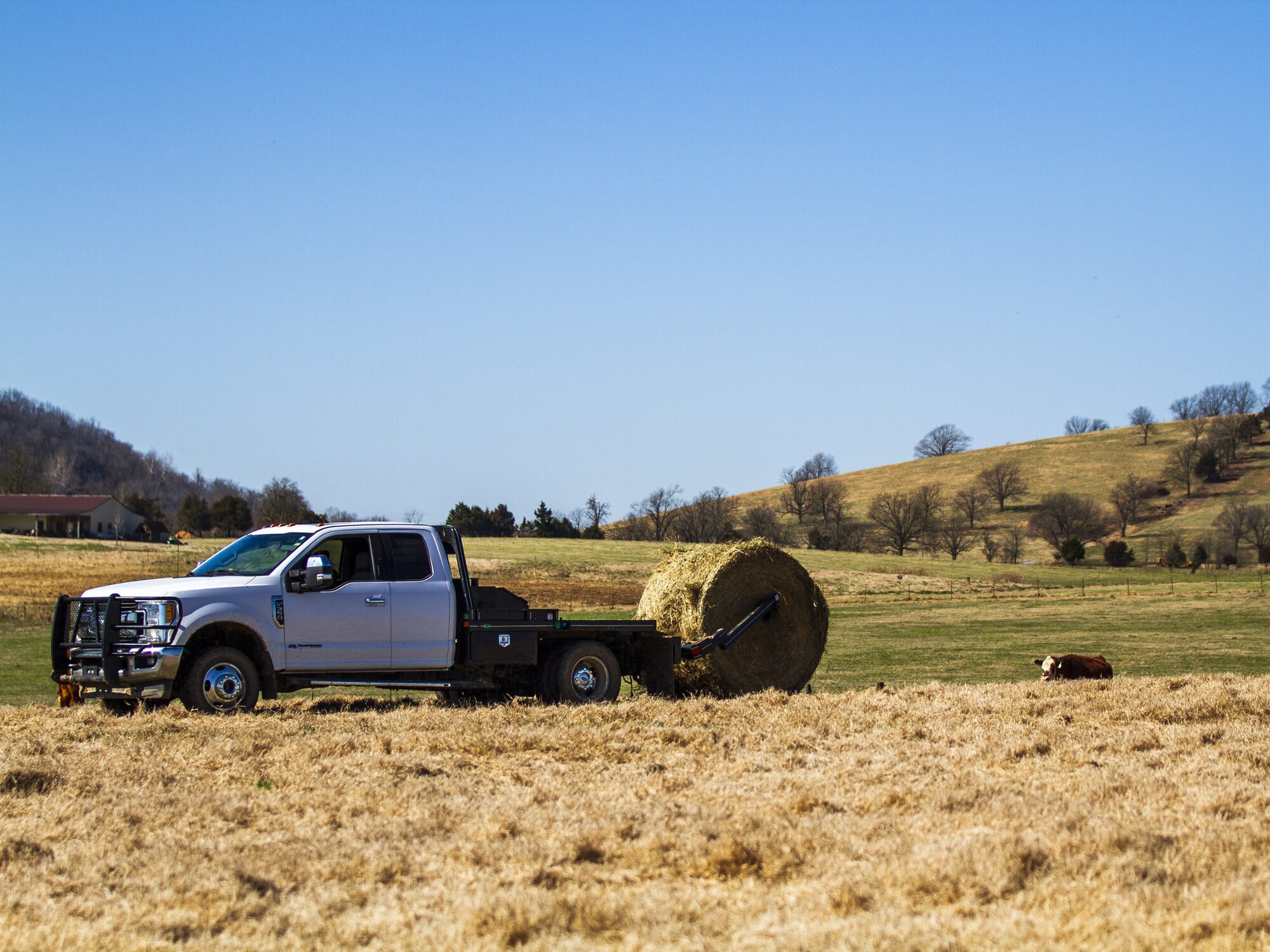
- Arm bale bed: For lifting, placing and unrolling. Compare an arm bed when unrolling round hay bales is part of your feeding routine.
- Spike bale bed: For lifting, moving and placing. Compare spike access to your stored hay and the other work your truck handles.
Bale beds: arm bed vs. spike bed
Both designs use powered equipment to handle hay. The useful distinction is how they engage the bale and what you need to do with it once it is lifted.
| Buying question | Arm bed | Spike bed |
|---|---|---|
| How does it handle hay? | Arms grip the bale for lifting and placement. | Spikes enter the bale for lifting and placement. |
| Is unrolling part of the job? | Butler’s arm-bed spinners are designed for unrolling. | Compare the arm bed if unrolling is required; Butler describes its spike bed for lifting and moving bales. |
| Does the truck do other chores? | Check the stowed arm position and usable deck. | Butler’s removable spikes store under the deck. |
| What should I measure? | Bale dimensions, storage access and the space needed for handling. | Bale dimensions and how you can approach the stored bales. |
| What limits the load? | The bed’s specifications and the completed truck’s applicable weight ratings both matter. | |
| Power Source | 12-Volt Electric / Hydraulic | 12-Volt Electric / Hydraulic |
| Gooseneck compatibility | Butler lists a recessed gooseneck hitch. Confirm trailer clearance with the arms stowed and the truck loaded. | Butler lists a recessed gooseneck hitch. Confirm hitch access, spike position and trailer clearance for the proposed setup. |
| Feeder compatibility | Discuss feeder placement alongside the arms’ travel, bale space and loaded truck weight. | Discuss feeder placement alongside spike operation, bale space and loaded truck weight. |
| Multi-bale capacity | Have DJ confirm the number and weight of bales the specific bed and truck can carry. Include the space needed for arm movement. | Have DJ confirm the number and weight of bales the specific bed and truck can carry. Include the loading sequence and spike clearance. |
Power and hitch details: Butler Arm Bed specifications and Butler Spike Bed specifications. Confirm controls, options and the complete loaded setup with DJ.
When an arm bale bed makes sense
Look closely at an arm bed if unrolling round hay bales is part of your feeding routine. Butler’s Arm Bed specifications describe synchronized arms and reinforced spinners for that job. The manufacturer also offers a removable spike option for certain handling needs.
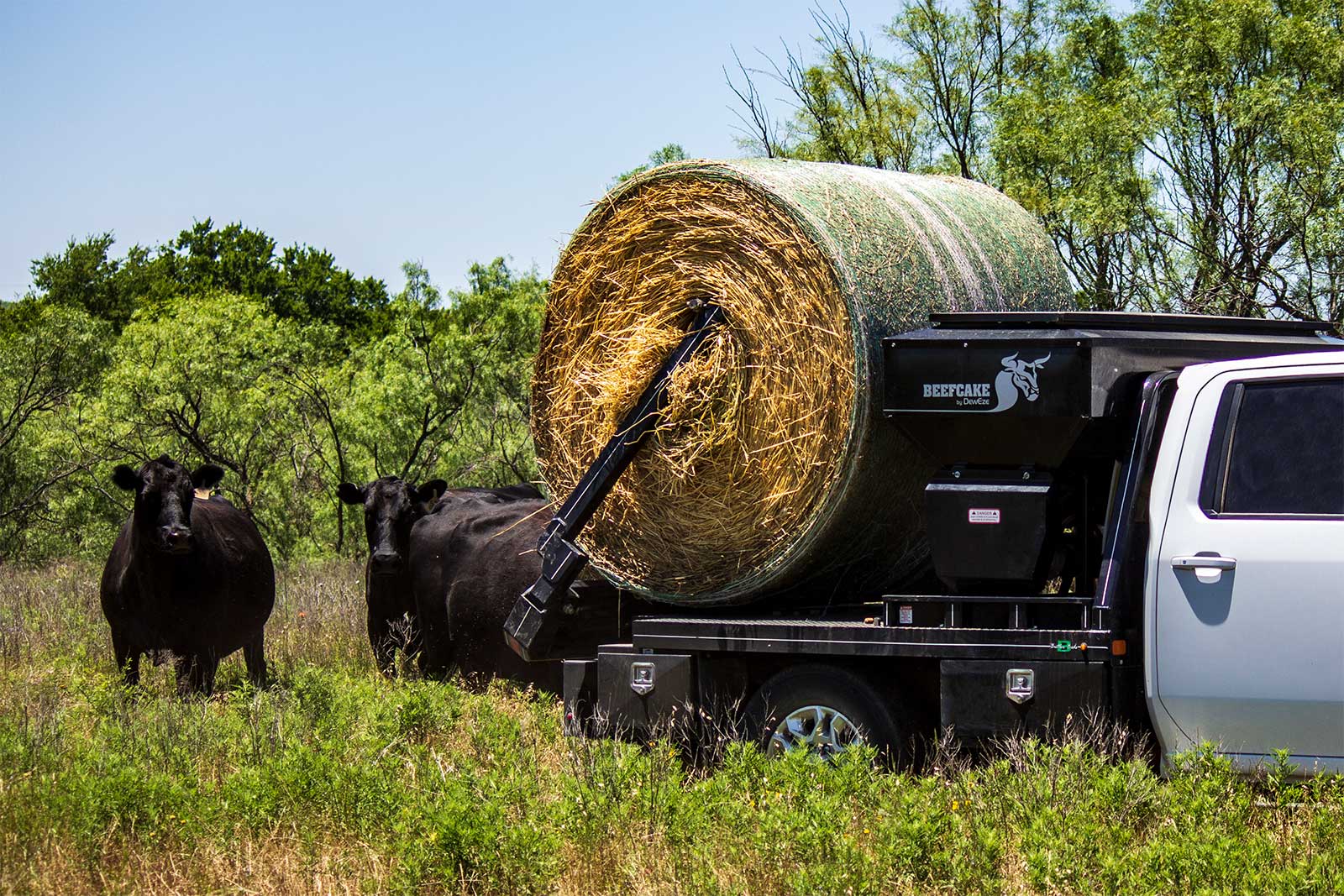
- Think through a normal feeding trip. Describe where the bales are stored and how you approach them. Explain whether you place hay in a feeder or unroll it along the ground when comparing models.
- The room around the hay matters too. A bed may suit the bale itself while the storage arrangement makes access awkward. Photos of the bale row, gate and feeding area help make that conversation specific.
When a spike bale bed makes sense
A spike bed is worth considering when lifting, moving and placing bales are the main jobs. Butler’s Spike Bed specifications describe a dual-spike design for large square or round bales, with an electric-over-hydraulic system.
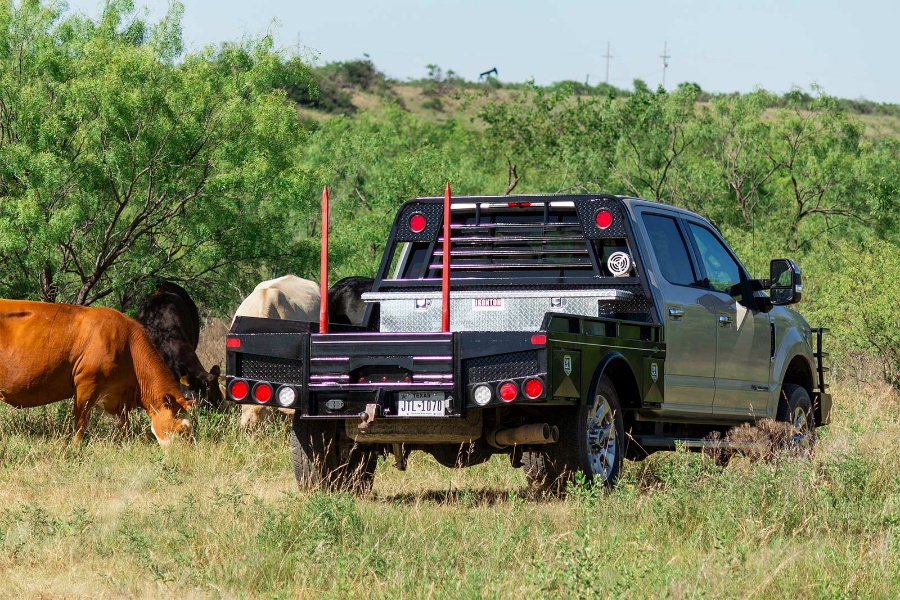
- The removable spikes can be stored under the deck when the truck is doing other work. That feature is useful to discuss if the same truck also carries fencing supplies, tools or other ranch equipment.
- Describe how your hay is stacked and which side of the bales you can reach. Also tell the shop if your hay format changes during the year. Compare the actual bale dimensions and weights with the equipment you are ordering.
Butler and DewEze: the manufacturer connection
Butler and DewEze are both part of Harper Industries. Harper acquired Butler in 2019, and its acquisition announcement described moving Butler manufacturing to Harper, Kansas. That is the connection behind the Butler beds DJ sells: the manufacturer behind DewEze also makes Butler.
- Butler is positioned around economical hay handling. For a buyer comparing equipment and price, that makes it a value-focused option to put on the shortlist. Compare the specific features, installation and current quote for each bed you are considering. Shared manufacturing ownership does not mean the beds have identical designs or equipment packages.
Which Butler bed fits your feeding routine? Tell DJ how you store and feed your hay, then bring the truck details. We can talk through arm and spike bed options. Discuss your bale bed.
Choose the bed and truck as one setup
Have the proposed bed checked against your exact truck before ordering. Give the shop the year, make, model and VIN, and identify whether it is a pickup or cab-and-chassis. Single or dual rear wheels, cab-to-axle dimensions and the intended bed length also belong in that review.
- If you are still buying the truck, discuss the hay bed first. That lets you check the proposed chassis against the equipment you want to install.
Lifting capacity and truck payload are different
A bed’s lifting rating describes a limit of the handling equipment. The truck still has to support the installed bed, hydraulic equipment, occupants, tools and hay. The space to carry a load does not establish the capacity to carry it.
- Use the truck manufacturer’s ratings for the actual vehicle. Ford’s towing and payload guidance explains the distinction between vehicle, axle and combined weight ratings. Have the finished setup and expected load reviewed against the appropriate limits for your truck.
Plan gooseneck towing around the complete setup
Butler lists a recessed gooseneck hitch on both its arm and spike beds. Tell us about your trailer and its normal load. Check hitch access and turning clearance with the bed, bale-handling equipment and any feeder in place. A hitch rating by itself does not set the truck’s towing limit.
- Include hay, feed, tools and trailer tongue weight in the loaded-truck review. Confirm the arrangement for the work you will actually do, including whether you plan to carry hay while towing.
Work out multi-bale capacity before you buy
If you want to move more than one bale per trip, bring the bale dimensions, actual weights and your target bale count. Ask DJ to check usable deck space, the loading sequence and the bed’s operating instructions for that plan.
A lifting-capacity figure is not a promise that the truck can carry that weight in every position or carry several bales. Confirm the total load, axle limits and how each bale will be secured. Include the feeder and its contents if they travel with the hay.
Include a Trip Hopper feeder in the build discussion
DJ sells and installs T&S Manufacturing Trip Hopper feeders. If the same truck handles hay and feed, discuss the feeder when choosing the bale bed.
- Confirm the feeder’s mounting position and loaded weight.
- Keep the proposed layout clear of arm or spike movement, bale loading and gooseneck access.
- Ask DJ to review the feeder model, bed and truck together before approving the installation.
Compare the complete bale-bed quote
Ask for a quote that identifies the bed model and installation scope. A useful comparison includes the hydraulic power system, controls, wiring, mounting work and selected options. Establish whether removal of the existing bed is included.
- Separate the equipment you need from the options you may want later. If you feed before daylight, discuss suitable work lighting. If tools stay on the truck, review storage placement. Explain the task each accessory needs to support.
- Ask how the controls will be demonstrated at handoff, which operating manual applies, and where to go for service. Review the applicable warranty terms for the equipment and installation. Current availability and scheduling should be confirmed for your particular build.
Plan for maintenance and service
Follow the operating and maintenance instructions for the bed installed on your truck. Keep its model information and manual available, and ask the installer to walk through the specified inspection and service points.
- Discuss a change in operation with the shop, including hydraulic leaks, damaged components or electrical trouble. Describe what changed and when it happens. Let the service team identify the next step before putting the equipment back into use.
- DJ’s work truck services include bed swaps, repairs to existing beds and electrical fixes. Contact us with the details of your truck and bed so we can discuss the work needed to get back to work.
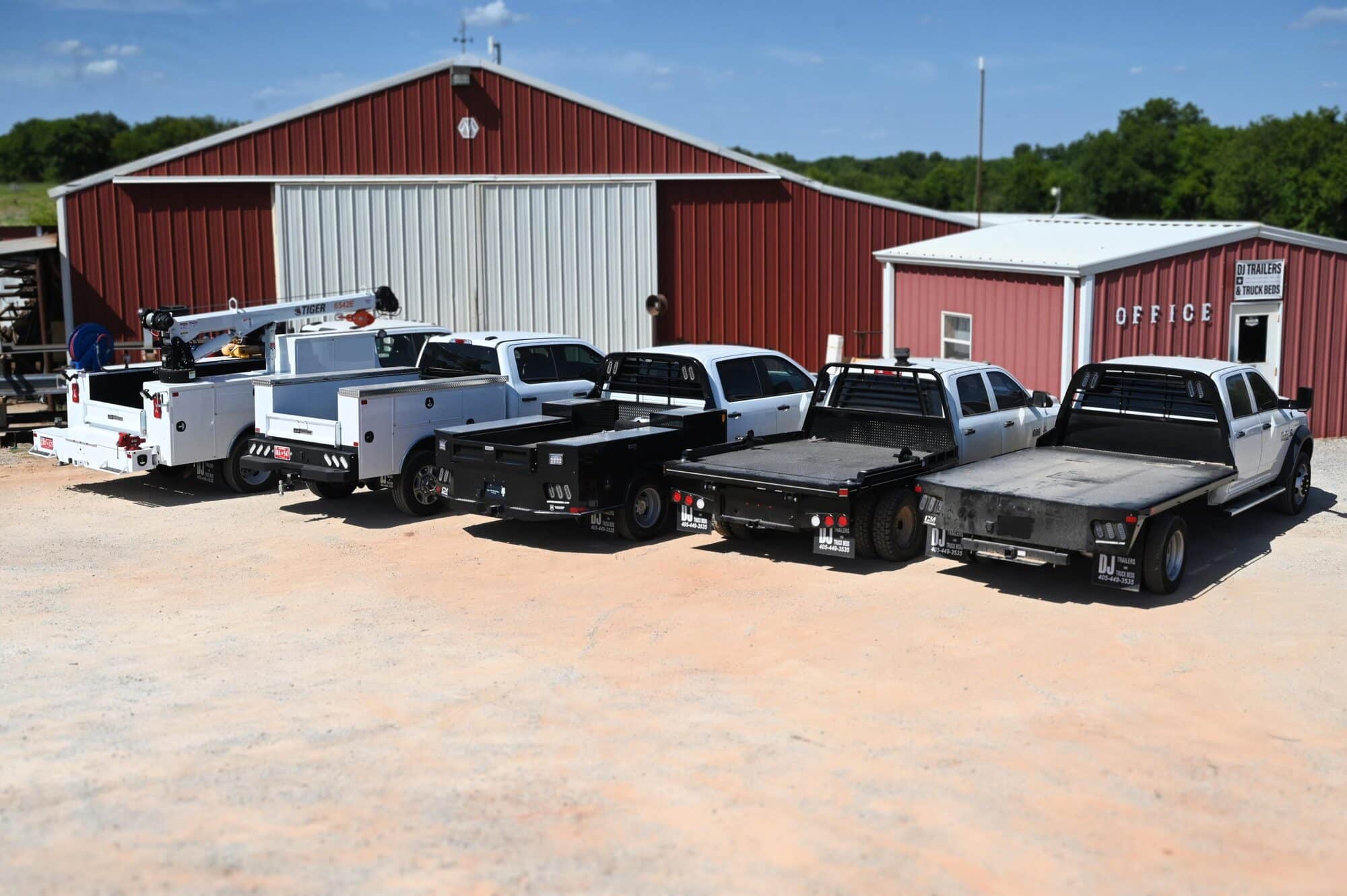
What to bring to DJ before choosing a hay bed
- Truck details: year, make, model, VIN and current bed setup.
- Hay details: bale type, dimensions and actual weights when available.
- Feeding routine: how hay is stored, where you feed and whether you unroll it.
- Other jobs: towing, tools, feed equipment and material hauling.
- Photos: the current truck, storage arrangement and anything you want to improve.
You can start the conversation before every measurement is ready. Tell us what you know, and we can discuss the information needed to compare the options.
Common questions about bale beds
What is a bale bed?
A bale bed is a truck bed equipped with a powered hay-handling mechanism, such as arms or spikes. It lets a suitably equipped truck lift and place bales. Some arm-bed designs also unroll round bales for feeding.
Can a bale bed replace a tractor?
It may handle some of the feeding and bale-moving jobs you currently do with a tractor. Compare your access, loads and feeding method. A tractor may still be needed for other work, storage arrangements or conditions beyond the truck setup’s intended use.
Are Butler and DewEze the same company?
Both brands are part of Harper Industries. Butler offers a value-focused range, while the product lines have their own models and options. Compare the actual equipment and quote for your job.
Can I tow a trailer with a bale bed?
A suitably specified bed and truck can include towing equipment. Have the complete truck, bed, hitch and trailer combination checked. Include the hay and other cargo carried while towing in the weight review.
Can I use a Trip Hopper feeder with a bale bed?
Ask DJ to check the specific combination. We sell and install Trip Hopper feeders and can discuss placement with your proposed bale bed. The review needs to cover loaded weight, bale-handling clearance, mounting and any gooseneck towing requirements.
Can I carry more than one bale?
That depends on the bed, truck, bale size and bale weight. Tell DJ how many bales you want to move per trip. Have the loading arrangement and total weight checked against the bed instructions and the truck’s ratings before relying on a multi-bale setup.
How much does a bale bed cost to install?
The installed price depends on the model, options, hydraulic equipment and work needed on your truck. Ask DJ for a quote covering the complete installation, with optional items identified separately.
Discuss your bale bed with DJ in Wayne
DJ FleetWorX sells and installs work truck equipment at 33297 OK-59, Wayne, OK 73095, near Purcell and Pauls Valley. Bring us your feeding requirements and truck details, and we will help you compare Butler options.
- Learn more about DJ’s shop and capabilities, or send us your bale-bed requirements. Give us a call at (405) 449-3535 to discuss a work-ready setup for your ranch.